Customs Clearance & Trade Compliance
Step-by-step customs clearance, HS codes, import documentation, and how to avoid delays at the border.
Featured guide
Start here
Customs Clearance and Trade Compliance: The Complete Shipper's Guide
Master customs clearance, HS codes, incoterms, import documentation, and trade compliance, everything you need for smooth international shipments.
Read guideAll Customs & Compliance guides
Customs Binding Rulings: How to Get Certainty Before You Ship
A ruling binds CBP to a position on your goods, but only your goods, only if your facts were right, and only until it is revoked.
Customs Valuation: How the Dutiable Value Is Actually Calculated
The six methods, the five additions to the invoice price, and the First Sale rule, which is still alive despite what a lot of guidance implies.
US Customs Bonds: Single Entry vs Continuous, and How the Amount Is Set
What a bond actually guarantees, the formula behind the number, and why paying high duties does not use it up.
Foreign Trade Zones vs Bonded Warehouses: When Deferring Duty Pays
Both defer duty. Only one allows manufacturing, only one protects you from a rate rise, and recent tariff actions closed the biggest FTZ benefit.
Duty Drawback: How to Reclaim Duty on Goods You Re-Export
Up to 99% of duty back on re-exported or destroyed goods: the deadline nearly every article gets wrong, and which tariffs actually qualify.
Restricted Party Screening: What Exporters and Forwarders Must Check
The lists, the free official tool, why EAR99 does not mean unrestricted, and the ownership rule that blocks companies whose names appear on no list at all.
Rules of Origin: How to Claim Preferential Duty Without Getting It Wrong
Origin is about where goods were made, not where they shipped from. The three tests that confer it, what USMCA and EU claims require, and why enforcement got serious.
Bill of Lading Types Explained: Original, Seaway, Telex and Switch
Which bill of lading releases your cargo, which one controls payment, and the mix-up that leaves containers sitting at destination.
Do You Need a Customs Broker? Broker vs Forwarder vs Filing Yourself
Three ways to clear customs, what each costs in money and risk, and the cases where self-filing is reasonable, plus the liability that never transfers.
How to Import from China to the USA: The Small Business Playbook
From supplier terms to delivered cargo: registrations, classification, the documents, who files what, and the timeline to plan against for a first China import.
Import Duty from China to the USA: How to Calculate What You Will Pay
Duty from China is now several layers stacked on one entry. How the calculation works, where each rate comes from, and how to estimate before you commit to an order.
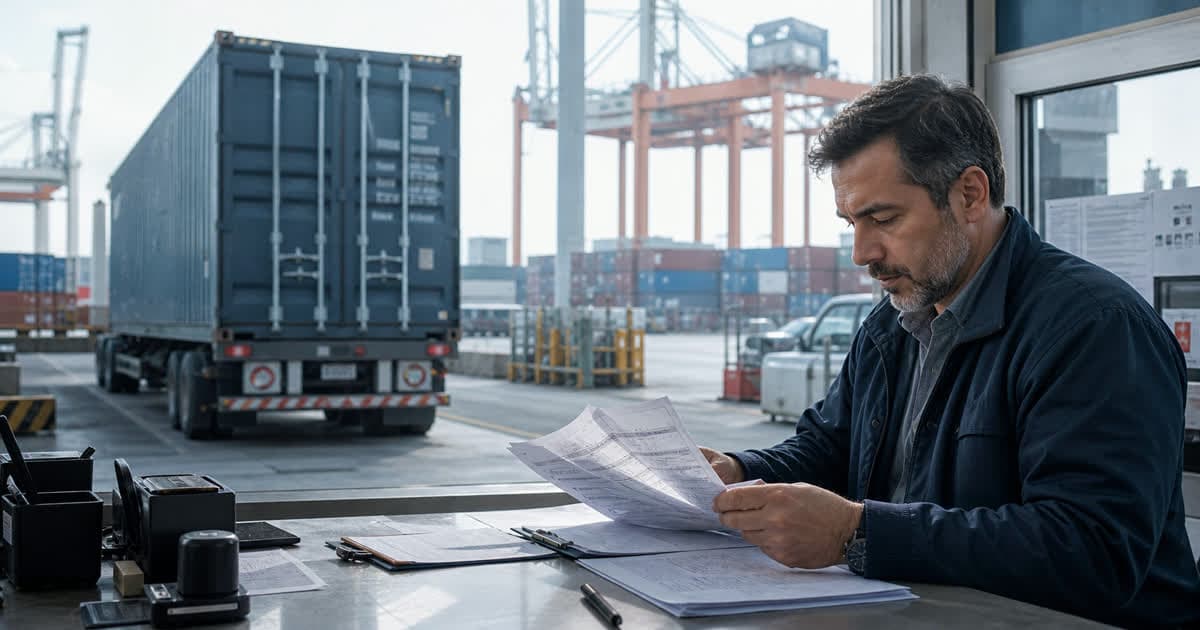
US Tariffs in 2026 After the IEEPA Ruling: What Importers Actually Pay
The Supreme Court struck down IEEPA tariffs in February 2026 and the duties were rebuilt under other statutes within months. What applies now, and how refunds work.
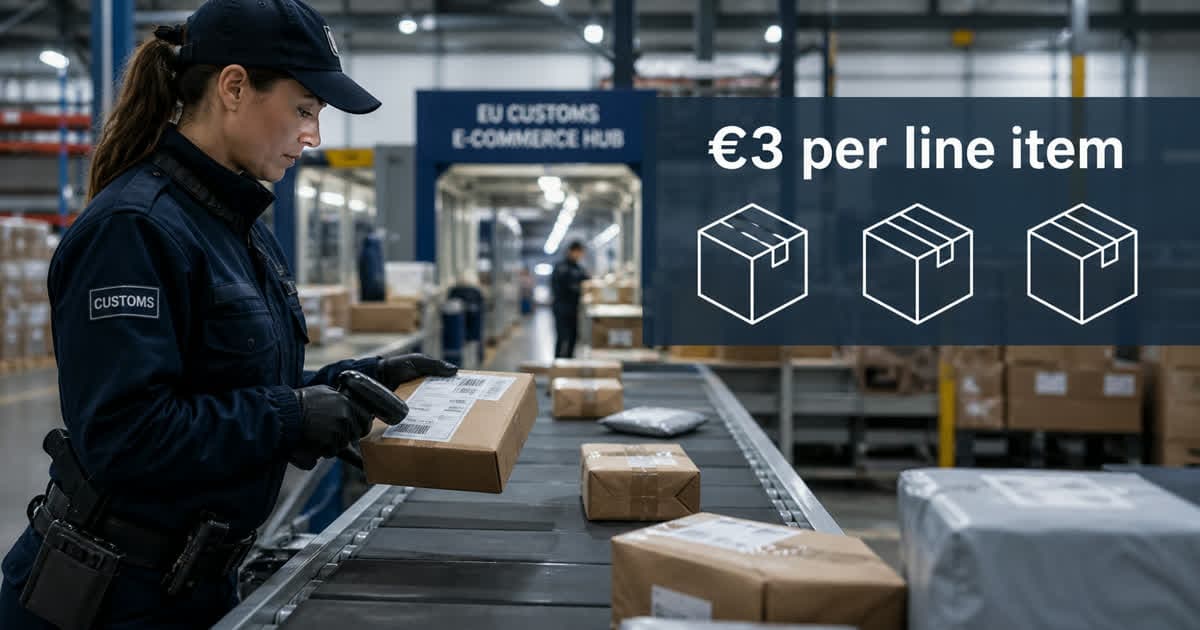
EU De Minimis Removal 2026: The 3 Euro Flat Duty Explained
The EU ended its 150 euro duty exemption on 1 July 2026. What the transitional flat fee means for ecommerce sellers, 3PLs and anyone shipping parcels into Europe.

CBAM Definitive Period: The 2026 Importer Checklist
CBAM moved from reporting to paying on 1 January 2026. What authorised declarant status means, who is exempt under the 50-tonne rule, and what to do before February 2027.
Customs Audit Readiness: The Import Records You Must Keep
Duty rates rose, so audit activity followed. A practical guide to the records importers must retain, how long to keep them, and the four findings auditors raise most.
Customs Clearance Explained: Process, Documents & Duties
A clear, global guide to customs clearance: the step-by-step process, the documents you need, HS classification, duties and taxes, and when to hire a broker.
Incoterms 2020 Explained: FOB, CIF, EXW, DDP and the Full List
A clear, accurate guide to Incoterms 2020: all 11 rules, who pays and who bears the risk, how FOB, CIF, EXW and DDP really work, plus practical buyer tips.
Freight Invoice Dispute Process: How Shippers Control Billing Variance
A practical guide for shippers handling freight invoice disputes, quote-to-invoice checks, accessorial charges, backup documents, approvals, and credit notes.
DDP vs DAP vs FOB: Understanding International Delivery Terms
DDP, DAP, and FOB are the three most commonly misunderstood Incoterms. Learn exactly what each one means, who pays what, and which is right for your trade.
HS Codes Explained: How to Find the Right Code for Your Cargo
HS codes determine your import duty rate in every country. Getting them wrong is costly. Learn how the Harmonised System works and how to find the right code for your products.
Import Documentation Checklist: Everything You Need for a Smooth Customs Clearance
Missing or incorrect import documents are the number one cause of customs delays. Use this complete checklist to make sure every shipment is documented correctly.
Customs & Compliance FAQ
What is an HS code?
Harmonised System (HS) codes classify goods for customs duties and statistics. The first six digits are harmonised globally; countries add further digits. An incorrect HS code can lead to wrong duty rates, audits, or clearance delays.
Who is responsible for import customs clearance?
It depends on the Incoterm. Under DDP the seller handles import clearance; under FOB, CFR, or CIF the buyer typically arranges import customs unless contractually agreed otherwise.
Why do customs hold shipments?
Common reasons include incomplete documentation, valuation disputes, incorrect HS classification, missing licences, physical examination, or outstanding duties and taxes.
How do I find the right HS code for my product?
Start from the product's material composition and function, work through the tariff chapter and heading structure, and check the destination country's national tariff, because codes are harmonised only to six digits and diverge beyond that. Where value or volume is significant, obtain a binding ruling from the customs authority — that converts an interpretation into a decision you can rely on. Misclassification is the most common cause of underpaid duty.
What happens if I declare the wrong HS code?
You may owe underpaid duty plus interest and penalties, and customs can generally reassess retrospectively for several years. Repeated errors can also raise your inspection rate and jeopardise trusted-trader status. If you discover an error, most jurisdictions treat voluntary disclosure far more leniently than the same error found at audit — so correcting it proactively is usually the cheaper path.
Can I claim preferential duty under a free trade agreement?
Only if the goods meet that agreement's rules of origin and you claim preference at entry with valid proof. Origin is not simply where the goods shipped from — it turns on where the last substantial transformation occurred, tested by tariff shift, regional value content, or a product-specific rule. Preference is never automatic, and unclaimed preference is simply lost.
What is an Authorised Economic Operator and is it worth applying?
AEO is a trusted-trader status granted after an audit of your compliance history, record-keeping, financial standing, and security. The benefits are operational rather than financial: fewer inspections, priority treatment when disruptions occur, simplified declarations, and recognition in countries with mutual recognition agreements. It is worth applying if you import or export regularly enough that inspection delays materially affect your supply chain.