Shipping & Customs Documents
Commercial invoices, bills of lading, certificates of origin, and the paperwork customs expects.
Featured guide
Start here
Import Documentation Checklist: Everything You Need for a Smooth Customs Clearance
Missing or incorrect import documents are the number one cause of customs delays. Use this complete checklist to make sure every shipment is documented correctly.
Read guideAll Documentation guides
Customs Binding Rulings: How to Get Certainty Before You Ship
A ruling binds CBP to a position on your goods, but only your goods, only if your facts were right, and only until it is revoked.
Customs Valuation: How the Dutiable Value Is Actually Calculated
The six methods, the five additions to the invoice price, and the First Sale rule, which is still alive despite what a lot of guidance implies.
US Customs Bonds: Single Entry vs Continuous, and How the Amount Is Set
What a bond actually guarantees, the formula behind the number, and why paying high duties does not use it up.
Foreign Trade Zones vs Bonded Warehouses: When Deferring Duty Pays
Both defer duty. Only one allows manufacturing, only one protects you from a rate rise, and recent tariff actions closed the biggest FTZ benefit.
Duty Drawback: How to Reclaim Duty on Goods You Re-Export
Up to 99% of duty back on re-exported or destroyed goods: the deadline nearly every article gets wrong, and which tariffs actually qualify.
Restricted Party Screening: What Exporters and Forwarders Must Check
The lists, the free official tool, why EAR99 does not mean unrestricted, and the ownership rule that blocks companies whose names appear on no list at all.
Rules of Origin: How to Claim Preferential Duty Without Getting It Wrong
Origin is about where goods were made, not where they shipped from. The three tests that confer it, what USMCA and EU claims require, and why enforcement got serious.
Freight Emissions Reporting in 2026: What Shippers Actually Have to Do
GLEC, ISO 14083 and Scope 3 explained, plus the rules that changed in 2026, including the one that caps what you can demand from small carriers.
Letters of Credit: How Document Discrepancies Delay Your Payment
Banks pay against documents, not goods. The discrepancies that stop payment, and how the shipping paperwork causes most of them.
Bill of Lading Types Explained: Original, Seaway, Telex and Switch
Which bill of lading releases your cargo, which one controls payment, and the mix-up that leaves containers sitting at destination.
Do You Need a Customs Broker? Broker vs Forwarder vs Filing Yourself
Three ways to clear customs, what each costs in money and risk, and the cases where self-filing is reasonable, plus the liability that never transfers.
How to Import from China to the USA: The Small Business Playbook
From supplier terms to delivered cargo: registrations, classification, the documents, who files what, and the timeline to plan against for a first China import.
Import Duty from China to the USA: How to Calculate What You Will Pay
Duty from China is now several layers stacked on one entry. How the calculation works, where each rate comes from, and how to estimate before you commit to an order.
How to Start Shipping Internationally: A First-Timer Checklist
The setup work before your first international shipment (registrations, supplier terms, HS codes and who does what) in the order it needs doing.
International Shipping for Small Business: The Complete US Guide
Your first international shipments, end to end: choosing a mode, the six documents, who clears customs, what it costs, and the mistakes that turn a small shipment expensive.
How to Find a Verified Freight Forwarder (Without Getting Burned)
"Verified" means nothing until you know who verified what. The six credentials worth checking, where to check each one yourself for free, and the references that actually reveal something.
US Tariffs in 2026 After the IEEPA Ruling: What Importers Actually Pay
The Supreme Court struck down IEEPA tariffs in February 2026 and the duties were rebuilt under other statutes within months. What applies now, and how refunds work.
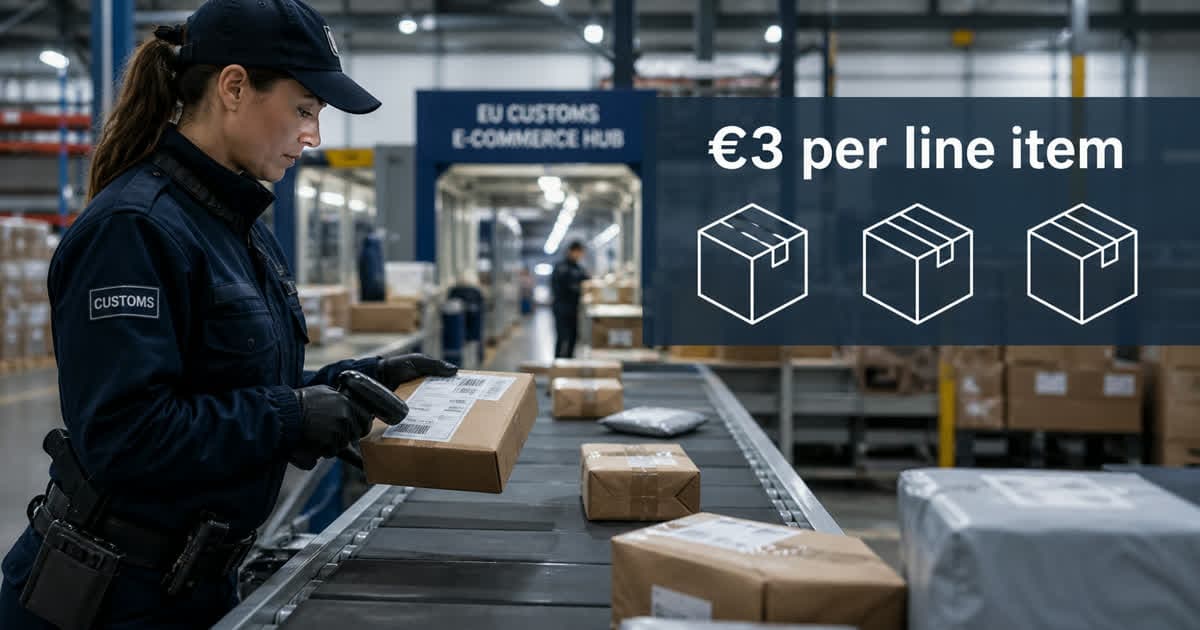
EU De Minimis Removal 2026: The 3 Euro Flat Duty Explained
The EU ended its 150 euro duty exemption on 1 July 2026. What the transitional flat fee means for ecommerce sellers, 3PLs and anyone shipping parcels into Europe.

CBAM Definitive Period: The 2026 Importer Checklist
CBAM moved from reporting to paying on 1 January 2026. What authorised declarant status means, who is exempt under the 50-tonne rule, and what to do before February 2027.
Customs Audit Readiness: The Import Records You Must Keep
Duty rates rose, so audit activity followed. A practical guide to the records importers must retain, how long to keep them, and the four findings auditors raise most.
HS Codes Explained: How to Find the Right Code for Your Cargo
HS codes determine your import duty rate in every country. Getting them wrong is costly. Learn how the Harmonised System works and how to find the right code for your products.
DDP vs DAP vs FOB: Understanding International Delivery Terms
DDP, DAP, and FOB are the three most commonly misunderstood Incoterms. Learn exactly what each one means, who pays what, and which is right for your trade.
Customs Clearance and Trade Compliance: The Complete Shipper's Guide
Master customs clearance, HS codes, incoterms, import documentation, and trade compliance, everything you need for smooth international shipments.
Documentation FAQ
What documents do I need for an international shipment?
The core set is a commercial invoice, a packing list, and a transport document — a bill of lading for sea or an air waybill for air. Depending on the destination and commodity you may also need a certificate of origin, an insurance certificate, an import or export licence, and product-specific certificates such as phytosanitary or fumigation documents. For containers, a VGM declaration is mandatory before loading.
What is the difference between a bill of lading and a sea waybill?
A bill of lading is a document of title that must be surrendered to obtain the cargo; a sea waybill is not, so the named consignee simply identifies themselves and takes delivery. Use a bill of lading when the document must be transferable — for letters of credit or selling goods in transit. Use a sea waybill for straightforward shipments, including between related companies, to avoid courier delays and demurrage.
What does "to order" mean on a bill of lading?
It makes the bill of lading negotiable. Consigning "to order" or "to order of shipper" means the document can be endorsed and transferred, so whoever holds the properly endorsed original can claim the cargo. This is what letter-of-credit transactions rely on. Naming a specific consignee instead creates a straight bill, releasable only to that party and not transferable.
What is a telex release?
A telex release is a message from the origin carrier to the destination agent confirming that the original bills of lading have been surrendered, allowing cargo release without presenting originals at destination. It solves the common problem of cargo arriving before the paperwork. It requires all originals to be surrendered at origin first, and the shipper is normally the party who authorises it.
What is a VGM and who is responsible for it?
VGM is the verified gross mass of a packed container — cargo, packaging, dunnage, and container tare combined. Under the SOLAS convention it must be declared before loading, and a container without one must not be loaded. The shipper named on the bill of lading is responsible for declaring and signing it, and it must be filed before the VGM cut-off or the box will be rolled.
Why do letters of credit get rejected so often?
Because banks pay against documents and apply the terms literally. A misspelled party name, a bill of lading dated outside the shipment window, a description that does not match the credit word for word, or a missing endorsement are all valid grounds for refusal. Review the credit terms the day it arrives, not the day you ship, and confirm you can produce exactly what it demands.
What is a certificate of origin and when do I need one?
A certificate of origin states where goods were produced and is required whenever the importer wants to claim a preferential duty rate under a trade agreement, and sometimes for general import control. Origin is decided by the agreement's rules of origin — where the last substantial transformation occurred — not simply by where the goods shipped from. An incorrect certificate is a customs liability recoverable years later.