Tag
#Customs Clearance
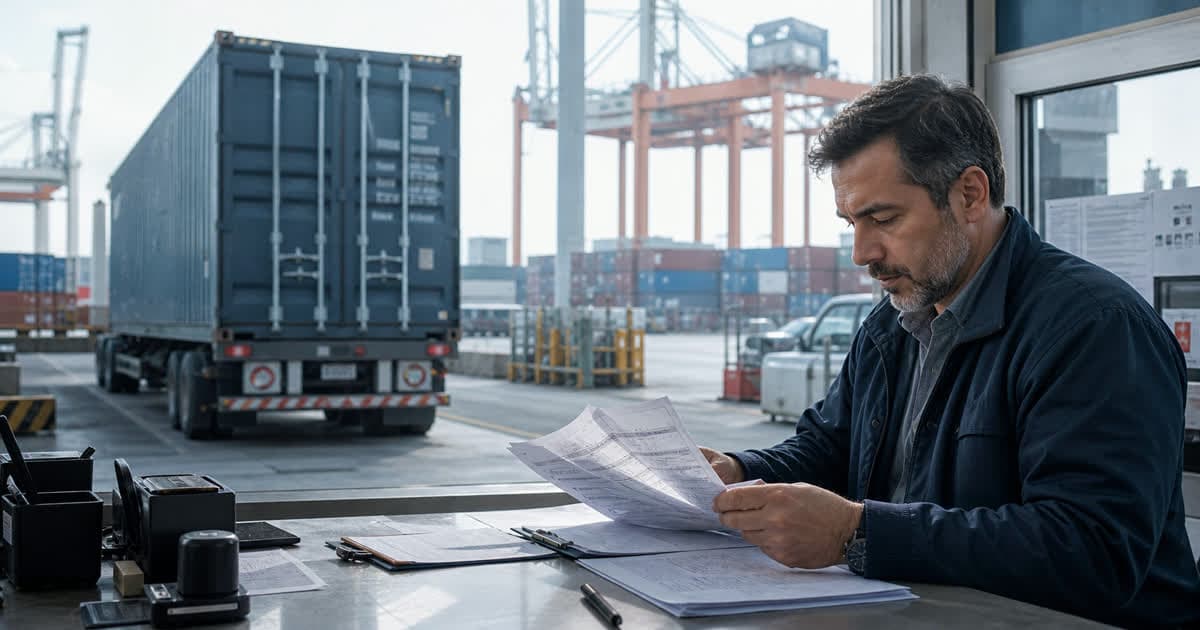
US Tariffs in 2026 After the IEEPA Ruling: What Importers Actually Pay
The Supreme Court struck down IEEPA tariffs in February 2026 and the duties were rebuilt under other statutes within months. What applies now, and how refunds work.

Customs Audit Readiness: The Import Records You Must Keep
Duty rates rose, so audit activity followed. A practical guide to the records importers must retain, how long to keep them, and the four findings auditors raise most.
How to Import from China to the USA: The Small Business Playbook
From supplier terms to delivered cargo: registrations, classification, the documents, who files what, and the timeline to plan against for a first China import.
Do You Need a Customs Broker? Broker vs Forwarder vs Filing Yourself
Three ways to clear customs, what each costs in money and risk, and the cases where self-filing is reasonable, plus the liability that never transfers.

HS Codes Explained: How to Find the Right Code for Your Cargo
HS codes determine your import duty rate in every country. Getting them wrong is costly. Learn how the Harmonised System works and how to find the right code for your products.
Customs Clearance and Trade Compliance: The Complete Shipper's Guide
Master customs clearance, HS codes, incoterms, import documentation, and trade compliance, everything you need for smooth international shipments.

CBAM Definitive Period: The 2026 Importer Checklist
CBAM moved from reporting to paying on 1 January 2026. What authorised declarant status means, who is exempt under the 50-tonne rule, and what to do before February 2027.
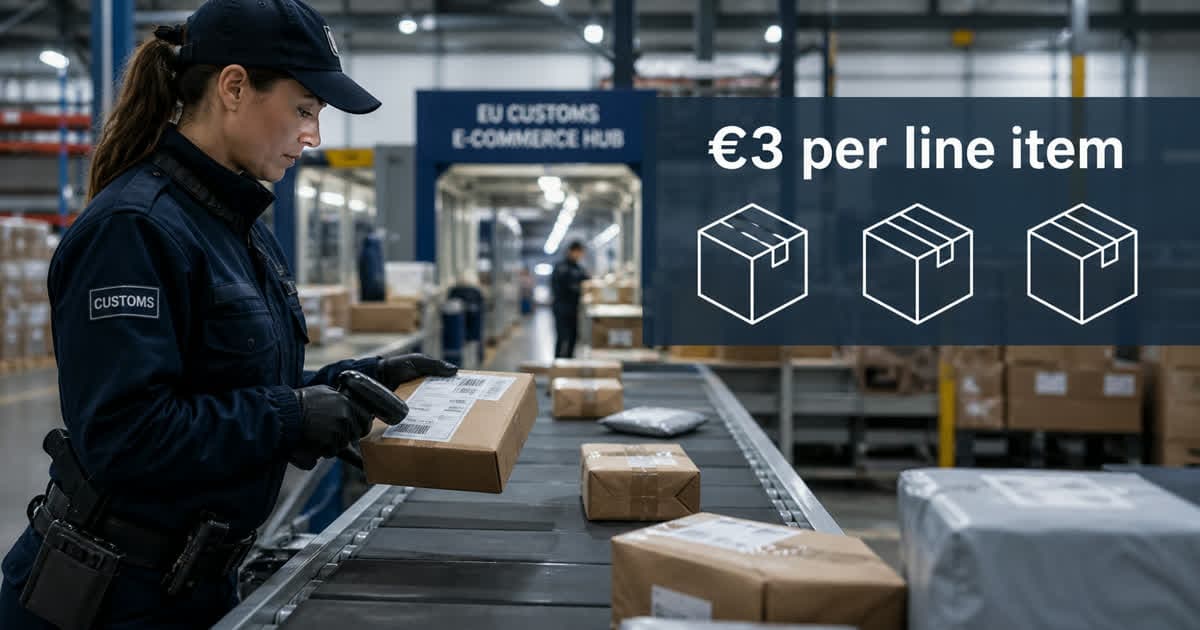
EU De Minimis Removal 2026: The 3 Euro Flat Duty Explained
The EU ended its 150 euro duty exemption on 1 July 2026. What the transitional flat fee means for ecommerce sellers, 3PLs and anyone shipping parcels into Europe.
International Shipping for Small Business: The Complete US Guide
Your first international shipments, end to end: choosing a mode, the six documents, who clears customs, what it costs, and the mistakes that turn a small shipment expensive.
How to Start Shipping Internationally: A First-Timer Checklist
The setup work before your first international shipment (registrations, supplier terms, HS codes and who does what) in the order it needs doing.
Import Duty from China to the USA: How to Calculate What You Will Pay
Duty from China is now several layers stacked on one entry. How the calculation works, where each rate comes from, and how to estimate before you commit to an order.
Bill of Lading Types Explained: Original, Seaway, Telex and Switch
Which bill of lading releases your cargo, which one controls payment, and the mix-up that leaves containers sitting at destination.
Restricted Party Screening: What Exporters and Forwarders Must Check
The lists, the free official tool, why EAR99 does not mean unrestricted, and the ownership rule that blocks companies whose names appear on no list at all.
Rules of Origin: How to Claim Preferential Duty Without Getting It Wrong
Origin is about where goods were made, not where they shipped from. The three tests that confer it, what USMCA and EU claims require, and why enforcement got serious.
Foreign Trade Zones vs Bonded Warehouses: When Deferring Duty Pays
Both defer duty. Only one allows manufacturing, only one protects you from a rate rise, and recent tariff actions closed the biggest FTZ benefit.
Duty Drawback: How to Reclaim Duty on Goods You Re-Export
Up to 99% of duty back on re-exported or destroyed goods: the deadline nearly every article gets wrong, and which tariffs actually qualify.
US Customs Bonds: Single Entry vs Continuous, and How the Amount Is Set
What a bond actually guarantees, the formula behind the number, and why paying high duties does not use it up.
Customs Binding Rulings: How to Get Certainty Before You Ship
A ruling binds CBP to a position on your goods, but only your goods, only if your facts were right, and only until it is revoked.
Customs Valuation: How the Dutiable Value Is Actually Calculated
The six methods, the five additions to the invoice price, and the First Sale rule, which is still alive despite what a lot of guidance implies.
Import Documentation Checklist: Everything You Need for a Smooth Customs Clearance
Missing or incorrect import documents are the top cause of customs delays. Use this checklist to make sure every shipment is documented correctly first time.
Free Trade Agreement Certificates of Origin: How to Actually Use Them
A certificate of origin under a free trade agreement only saves duty if the product actually qualifies under the agreement's specific rules of origin, not just because it was made in a member country.
Customs Post-Entry Amendments: Fixing a Filing Mistake After the Fact
A wrong value, code, or quantity on a customs entry does not have to become a compliance problem, as long as it is corrected the right way and within the right window.
Consignee, Notify Party and Ultimate Consignee: Who Is Who on a Shipment
A bill of lading names several parties who are not the buyer, and getting one of these fields wrong can hold cargo at destination even when everything else about the shipment is correct.
ATA Carnets and Temporary Imports Explained
An ATA carnet moves goods across a border temporarily without paying duty or posting a local deposit. The rules changed in 2026: digital carnets went live in 30 territories on 1 June, and Mexico now demands pre-registration. Here is what a carnet covers, what it costs, and when it is the wrong tool.
First Sale for Export: Lowering Your Customs Valuation
When goods move factory to middleman to importer, US customs law lets you pay duty on the earlier, lower price instead of what you actually paid, if you can prove it. Here is how first sale for export actually works, what CBP demands as proof, and why Congress is trying to abolish it this year.
Pro Forma Invoice in International Trade Explained
A pro forma invoice looks like an invoice but is legally a quotation, and that distinction matters at three separate points: customs entry, a letter of credit, and getting paid. Here is what CBP actually requires when the real invoice is not ready yet, and where treating the two documents as interchangeable causes real delay.
Tariff-Rate Quotas Explained: TRQs and Your Duty Bill
A tariff-rate quota is not a quota in the sense most people mean. Nothing is barred from entering. What changes is the duty rate, and getting the timing wrong on a time-sensitive commodity can mean paying substantially more than you planned.
TIR Carnet Explained: International Road Transit Under Seal
A TIR carnet and an ATA carnet get confused constantly, and the difference matters: one covers goods passing through customs territory under seal on their way to a final destination, the other covers goods that will leave again unchanged. Only one of them is meant for permanent imports.
AES and EEI Explained: How US Export Filing Works
Most US exports need Electronic Export Information filed in the Automated Export System before the cargo moves. This guide covers who files, when, what goes on the bill of lading, and what a wrong filing costs.
EUDR Explained: What the EU Deforestation Regulation Means for Freight
The EU Deforestation Regulation has been postponed twice, and as of September 2026 it applies from 30 December 2026. Here is who carries the legal duty, what a shipper needs ready, and where a freight forwarder fits.
ICS2 and the EU Entry Summary Declaration: What Shippers Must Supply
ICS2 is the EU system that collects safety and security data on every consignment before it arrives. As of September 2026 it covers air, sea, road and rail, and the data you give your forwarder decides whether cargo is stopped.
UFLPA Detentions and the US Forced Labor Import Ban Explained
A UFLPA detention starts a 30-day clock, and the burden of proof sits with the importer. Here is how the forced labor ban works, what CBP asks for, and what shippers and forwarders should have ready before cargo is held.
CBP Is Voiding Importer of Record Numbers: What Importers and Brokers Should Check
Since 18 September 2026, US Customs and Border Protection has said it will void any importer of record number whose Form 5106 data is inaccurate or incomplete. Here is what the Federal Register notice actually says, what is still unreported, and what to check this week.
Binding Tariff Rulings Explained: EU BTI vs US CBP Rulings
A binding ruling locks in your tariff classification before you ship, but the EU and US run genuinely different systems, and both cover less than importers assume. Here is how BTI and CBP rulings actually work, what protection they give you, and what they never touch.
Assists, Royalties and Customs Value: What You Must Add to the Price Paid
First sale lowers the price you start from. This is the mirror-image problem: the assists, royalties, resale proceeds, packing costs and commissions the law requires you to add back on top, and when each one actually applies.
Section 321 De Minimis and Type 86 Entry: What Changed
The $800 Section 321 exemption is suspended worldwide and Entry Type 86 has not accepted a new filing since August 2025, and neither the Supreme Court IEEPA ruling nor the litigation that followed brought either one back. Here is what CBP actually requires for low-value shipments now, sourced to the Federal Register and CBP guidance.
Inward and Outward Processing Relief: EU and UK Duty Suspension Explained
Inward and Outward Processing Relief are EU and UK customs procedures that suspend or reduce duty before it is paid, not refund it afterwards. Here is what each actually requires, and why the paperwork burden is the part importers underestimate.
Country of Origin Marking Rules Explained: Marking vs Duty Origin
A product can be legally marked "Made in Vietnam" and still fail to qualify as Vietnamese under a free trade agreement at the very same time, because marking and duty preference are decided by two different legal tests. Here is what the marking rule actually requires, where it does not apply, and what it costs to get wrong.
The Harmonized System Revision Cycle Explained: Why HS 2027 Became HS 2028
There is no HS 2027. The World Customs Organization pushed its latest Harmonized System revision back a year, and the edition that actually takes effect, HS 2028, enters into force on 1 January 2028. Here is how the revision cycle really works, and what an importer or forwarder needs to check when it lands.
FDA Prior Notice and FSVP: What Food Importers Must File Before US Customs
Food shipped to the United States needs more than a customs entry. FDA wants a Prior Notice filed in advance, a registered foreign manufacturer, and a named FSVP importer, and a gap in any of them can strand the cargo at the port.
ISF 10+2 (Importer Security Filing) Explained: Who Files, What and When
The Importer Security Filing, known as ISF or 10+2, is the advance data filing US Customs and Border Protection requires for ocean cargo bound for the United States. This guide covers who files, the ten importer elements, the deadline, bonds, penalties and a practical forwarder workflow.
Mexican Pedimento, IMMEX and Customs Brokers Explained
The pedimento is the customs declaration behind every Mexican import or export, and IMMEX is the program that lets manufacturers import inputs without paying duty first. This guide explains both, who may file, what changed for 2026, and where the US entry takes over.
Phytosanitary Certificates and Plant Import Permits Explained
A phytosanitary certificate is an official plant health document issued by the exporting country's national plant protection organization, and the importing country decides when it is needed. This guide covers who issues it, how US import permits fit in, how ePhyto works and what happens to cargo that fails inspection.
UK Import Customs Declarations: CDS, EORI and Postponed VAT Explained
To import goods into Great Britain you need a GB EORI number, a customs declaration made on the Customs Declaration Service (yourself or through an agent), and a plan for paying duty and import VAT. This guide covers each step and what has changed at the border, as of 6 October 2026.
AEO and CTPAT Explained: What Trusted Trader Status Really Gets You
Authorised Economic Operator (AEO) status in the EU and UK and CTPAT in the US are voluntary trusted trader programmes that buy fewer checks and faster clearance, not lower duty. Here is how each one works, what it takes to get in and who should bother.
Importing into Canada After CARM: The CAD, RPP Security and Your Customs Broker
Since October 2024 every commercial import into Canada is accounted for in CARM, the CBSA system that replaced the B3 with the Commercial Accounting Declaration. This guide explains what the importer must set up, what the broker can and cannot do, and the deadlines that now apply.
Customs Penalties and Prior Disclosure: How 19 USC 1592 Works
Section 1592 lets CBP penalise a false or incomplete import entry even when no duty was lost. A valid prior disclosure, made before you know of an investigation and paired with a tender of the lost duty, can cut the penalty to interest or to nothing.
ECCN and EAR99 Explained: How US Export Control Classification Works
An Export Control Classification Number (ECCN) places an item on the US Commerce Control List and, with the destination, decides whether a licence is needed. Items not on the list are EAR99, which is a classification, not a free pass.
Importing into Australia: Customs Declarations, the ICS and Biosecurity Explained
Australian import clearance runs on two tracks: the Australian Border Force clears the goods for duty and GST through the Integrated Cargo System, and the Department of Agriculture, Fisheries and Forestry clears them for biosecurity. Here is how both work, as of October 2026.
India Import Customs Explained: IEC, Bill of Entry, ICEGATE and Duty
Every commercial import into India needs a DGFT Importer Exporter Code and a Bill of Entry filed on ICEGATE, usually before the vessel arrives. This guide explains the filing deadlines, how the duty is built up, and the BIS and FSSAI holds that stop cargo most often.
On-Board Courier (OBC) and Hand-Carry Shipping Explained
An on-board courier is a person who flies as a passenger with your urgent shipment in their baggage. Here is when that beats next-flight-out air cargo or a charter, what limits apply, and how the price is built.
The US Customs Broker License Exam (CBLE): What Forwarders Need to Know Before Licensing In-House
A practical guide for forwarders weighing an in-house US licensed customs broker: who can sit the CBLE, how it is run, what licensing costs after you pass, and when partnering with an outside broker makes more sense.
Exporting Food to China: GACC Registration Under Decree 248 and Its Replacement, Decree 280
Every overseas factory that makes, processes or stores food for China must hold a GACC registration number. Decree 280 replaced Decree 248 on 1 June 2026: here is who registers, how, for how long, and what the customs entry needs.
Freight and Trade Update, Mid-October 2026: Rates Ease, CBP Targets Low-Value Entries
Between 6 and 13 October 2026, container spot rates eased after Golden Week, CBP proposed tighter rules for entries of $2,500 or less, USTR kept the China Section 301 tariffs in place, and attacks on ships around Hormuz intensified. The US port fee suspension still ends on 9 November.