Tag
#Supply Chain

8 Contingency Questions to Ask Your Freight Forwarder Before the Next Disruption
Every forwarder handles a normal shipment. 2026 showed which ones handle a closed corridor. Eight questions that reveal whether your provider has a real plan B.

Freight Budget Planning in a Volatile Market: A Scenario Method
A single-number freight budget fails in a year where lanes move 50% in a quarter. A three-scenario method that survives contract season and gives finance a defensible range.
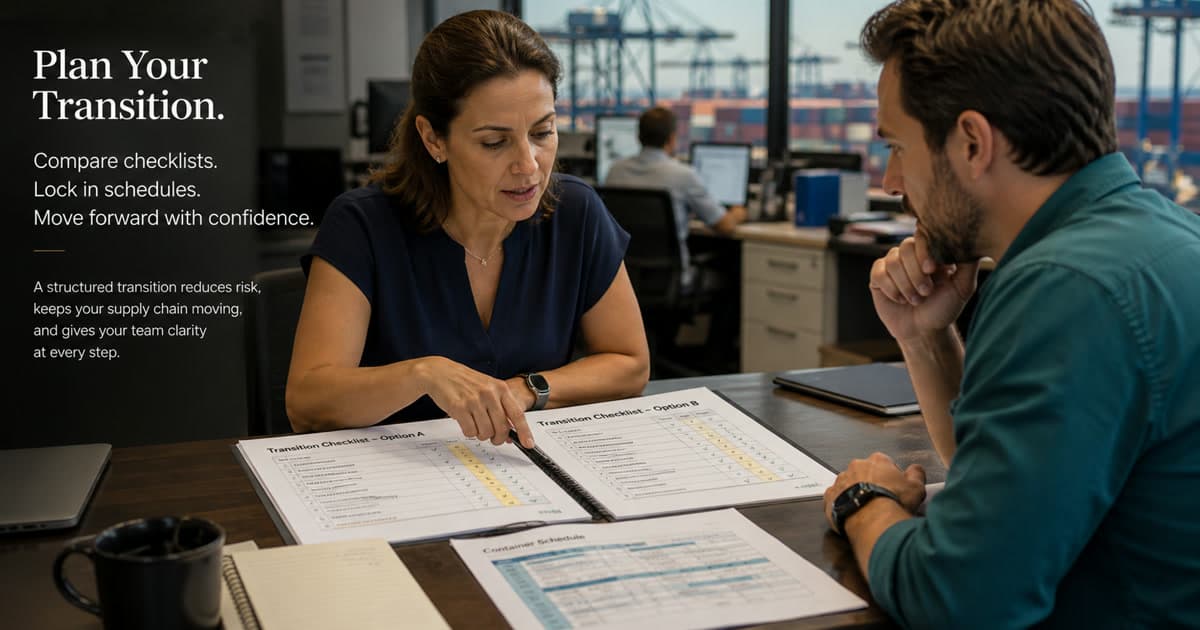
Switching Freight Forwarders Without Breaking Your Supply Chain
Changing forwarder is operationally risky and routinely botched. A phased transition plan covering data, in-transit cargo, customs continuity and the 90-day handover.
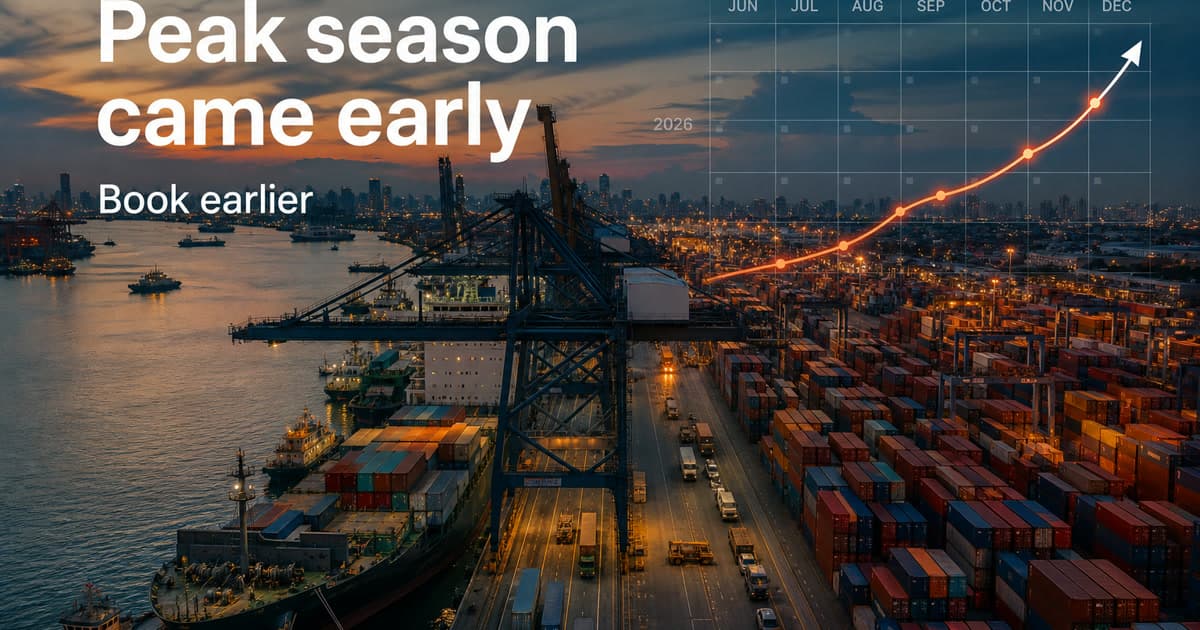
Peak Season 2026 Came Early: How Shippers Should Book Through It
Front-loading ahead of tariff deadlines pulled peak season forward into the second quarter of 2026. What that means for booking, allocation and Q4 capacity.
China+1 Sourcing: What Shipping Actually Looks Like From 8 Alternative Countries
Eight China+1 countries compared on ports, realistic modes and the freight friction nobody mentions when they pitch you the factory.
The Shipping Calendar to Chinese New Year 2027: Every Closure That Moves Your Cargo
Golden Week, Diwali, Chuseok, Chinese New Year and Ramadan: the confirmed dates, the ones not yet announced, and the week Korea splits from China.
Ocean Carrier Alliances in 2026: Who Sails With Whom, and Why It Matters
Gemini, Ocean Alliance, Premier and the independents: the current line-up, capacity shares, and the schedule-reliability gap that is now enormous.
The 15 Busiest Container Ports, and Why the Biggest Is Not the Point
Full-year 2025 throughput for the top 15, plus the gateway-versus-transshipment split that decides whether a port matters to your cargo at all.
Warehousing and 3PL Pricing: What You Are Actually Paying For
Storage, handling, pick and pack, receiving, and the accessorials that quietly dominate the bill, how to read a 3PL quote properly.
Belly Cargo vs Freighter Aircraft: Where Air Freight Capacity Comes From
Every air freight booking sits either in the belly of a passenger aircraft or on a dedicated freighter, and the two behave differently. Knowing which one you are on explains size limits, dangerous goods rules, routing and why space vanishes when schedules change.
Cross-Docking and Consolidation Hubs Explained: How Freight Moves Without Sitting Still
Cross-docking moves freight from an inbound vehicle to an outbound one with little or no storage in between. Here is how it works, where hub-and-spoke networks use it, and where it goes wrong.
EUDR Explained: What the EU Deforestation Regulation Means for Freight
The EU Deforestation Regulation has been postponed twice, and as of September 2026 it applies from 30 December 2026. Here is who carries the legal duty, what a shipper needs ready, and where a freight forwarder fits.
UFLPA Detentions and the US Forced Labor Import Ban Explained
A UFLPA detention starts a 30-day clock, and the burden of proof sits with the importer. Here is how the forced labor ban works, what CBP asks for, and what shippers and forwarders should have ready before cargo is held.
Vendor Managed Inventory and Milk Runs: A Forwarder’s Operational Role
Vendor managed inventory and milk run collection both sound like buyer-side strategy decisions, but a forwarder is the one who has to run them: scheduled pickups on a fixed timetable, buffer-stock warehousing, and data feeds accurate enough that nobody upstream needs to ask what is coming.
AEO and CTPAT Explained: What Trusted Trader Status Really Gets You
Authorised Economic Operator (AEO) status in the EU and UK and CTPAT in the US are voluntary trusted trader programmes that buy fewer checks and faster clearance, not lower duty. Here is how each one works, what it takes to get in and who should bother.
Container Seals Explained: ISO 17712 Classes, Bolt Seals and Seal Numbers
A container seal is a numbered, tamper-evident lock on the door, and its number is a piece of evidence that follows the box from stuffing to unloading. Here is how ISO 17712 classes work, who applies the seal and what happens when the number does not match.
Buyer's Consolidation: Combining Several Suppliers' Cargo into One FCL
Buyer's consolidation receives goods from several suppliers at one warehouse near origin, checks them and ships them as a single container under one house bill of lading. This guide explains the process, the documents, the Incoterms implication and when separate LCL shipments are still the better choice.
Panama Canal Transit Slots, Draft Limits and Tolls Explained for Shippers
The Panama Canal runs on a booking system, a lake-level draft limit and a published toll tariff. This guide explains each one, what the Panama Canal Authority announced through October 2026, and how it reaches a shipper as transit time and surcharges.
Shipping to Landlocked Countries: How Transit Corridors Work
Cargo for a landlocked country is discharged at a neighbour's seaport, moved onward under a customs transit procedure and cleared at the final destination. This guide explains the chain, why it costs more and what to settle before you book.